

1 / 7 · Click to enlarge
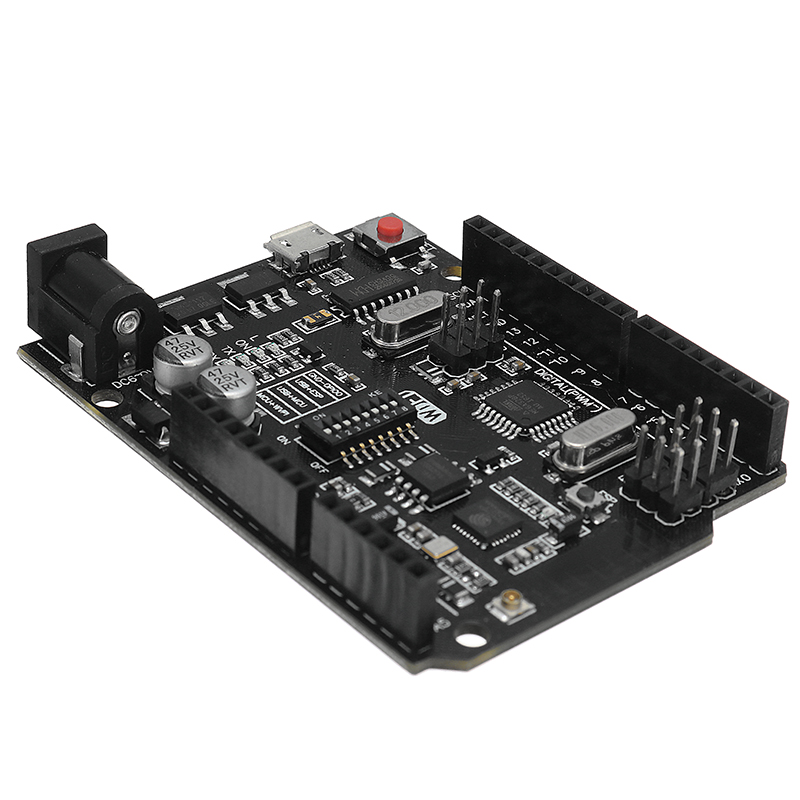
UNO+WiFi R3 ATmega328P+ESP8266 Module 32Mb Memory USB-TTL CH340G
5.0138 ratingsThe UNO+WiFi R3 ATmega328P+ESP8266 Module 32Mb Memory USB-TTL CH340G by Pricio is a mid-range electronics designed for everyday users. It features Microcontroller: ATmega328 and IC Wi-Fi: ESP8266. Customers praise its excellent build quality and fast and responsive. 100% of buyers rate it 4★ or above.
Available Offers
Free Delivery on this order. No minimum order value.
15-Day Easy Returns — hassle-free return & full refund.
Secure Payment — 100% safe checkout with UPI, Cards & Net Banking.
Available Offers
5% Cashback
Pay with UPI & get 5% cashback (up to ₹50) via Razorpay
No-Cost EMI
Available on select bank cards at checkout. 0% interest for 3 months.
Free Shipping
Free delivery on all orders. No minimum order value.
Cash on Delivery
COD available on orders up to ₹5,000 across India.
Quick Specs
Ideal For
About This Product
The UNO+WiFi R3 ATmega328P+ESP8266 Module 32Mb Memory USB-TTL CH340G by Pricio is a mid-range electronics designed for everyday users. Customers highlight its excellent build quality and fast and responsive.
Key Specifications
- Microcontroller: ATmega328
- IC Wi-Fi: ESP8266 — fast, stable wireless internet
- USB-TTL converter: CH340G
- Power Out: 5V-800mA
- Power IN. USB: 5V (500mA max.)
- Power IN. VIN/DC Jack: 9-24V
- Power Consumption: 5V 800mA
- Logic Level: 5V
Customer Verdict
100% of buyers rated this product 4 stars or above. The most appreciated qualities are: excellent build quality, fast and responsive, impressive sound quality, compact and portable.
Why Buy from Pricio?
Pricio sources this product directly, cutting out multiple middlemen. Every order includes free shipping, a 15-day return policy, and secure payment via Razorpay.
Description:
Full integration on one board: Uno R3 ATmega 328 and WiFi ESP8266 with memory 32Mb (MegaByte). All of the modules can work together or each separately. And everyone has their own pinout headers.
The convenient solution for the development of new projects requiring U n o and WiFi.
Via USB you can update sketches and firmvare for ATmega328 and for ESP8266. For this on board have the USB-serial converter CH340G.
Use this board is very simple.
The board has DIP-switch, to connect the modules.
For example, to: USB and ATmega328, USB and ESP8266, ATmega328 and ESP8266.
Table DIP- switch:
Specification:
Package included:
1 x ATmega328P+ESP8266 Board 32Mb Memory
 ,
, ,
, ,
, ,
, ,
,






.jpg)
